
Employment discrimination cases require more than a strong understanding of workplace laws. They often involve detailed investigations, extensive documentation, multiple parties, and strict procedural deadlines. As employment regulations continue to evolve, law firms need efficient processes to handle these matters while maintaining excellent client service.
An employer discrimination attorney plays a central role in helping employers navigate workplace disputes, defend against claims, and maintain compliance with federal and state employment laws. Whether representing businesses during Equal Employment Opportunity Commission (EEOC) investigations or defending complex litigation, these attorneys balance legal strategy with practical business considerations.
For employment law firms, managing discrimination matters efficiently becomes increasingly important as caseloads grow. Standardized workflows, organized case files, and reliable legal support allow attorneys to spend more time advising clients and preparing strong legal arguments.
Key Takeaways
- Employer discrimination attorneys advise businesses on workplace discrimination claims, investigations, compliance, and litigation.
- Employment discrimination matters require careful document management, legal research, and deadline tracking.
- Standardized workflows help law firms improve productivity without sacrificing quality.
- Additional legal support allows attorneys to focus on legal strategy while administrative and litigation tasks remain organized.
What Does an Employer Discrimination Attorney Do?
An employer discrimination attorney represents employers facing workplace discrimination allegations and helps organizations comply with employment laws before disputes arise. Their work combines litigation, risk management, legal research, and preventative counseling.
Unlike attorneys representing employees, employer-side attorneys focus on protecting businesses while ensuring workplace policies comply with applicable regulations.
Typical responsibilities include:
- Evaluating discrimination claims
- Advising employers during internal investigations
- Preparing responses to EEOC charges
- Conducting legal research
- Drafting pleadings and motions
- Negotiating settlements
- Representing employers during mediation
- Managing discovery
- Preparing witnesses for depositions
- Defending employers at trial
Many firms also assist employers with proactive compliance through policy reviews, employee handbook updates, supervisor training, and workplace investigations.
Employment law practices often rely on experienced litigation support during these matters. Firms looking to expand capacity frequently benefit from dedicated remote attorney services that assist with legal research, drafting, and case preparation.
Federal Employment Laws Employer Discrimination Attorneys Commonly Handle
Employer discrimination attorneys regularly advise clients on laws such as:
- Title VII of the Civil Rights Act
- Americans with Disabilities Act (ADA)
- Age Discrimination in Employment Act (ADEA)
- Equal Pay Act
- Family and Medical Leave Act (FMLA)
- Pregnancy Discrimination Act
- Genetic Information Nondiscrimination Act (GINA)
Many cases also involve state-specific employment laws that provide broader employee protections than federal regulations.
Types of Employer Discrimination Cases Do Law Firms Handle
Employment discrimination practices handle a wide variety of workplace disputes. Some involve a single employee, while others develop into class actions affecting hundreds of workers.
Common discrimination claims include:
Race Discrimination
Claims involving hiring decisions, promotions, discipline, termination, compensation, or workplace treatment based on race.
Sex and Gender Discrimination
These matters may involve unequal treatment, pregnancy discrimination, gender identity, or sexual orientation issues.
Disability Discrimination
Employers may face allegations involving reasonable accommodations, medical leave, or disability-related employment decisions.
Religious Discrimination
These claims often concern scheduling, workplace policies, dress codes, or reasonable religious accommodations.
Age Discrimination
Older employees may allege discriminatory hiring, layoffs, promotions, or termination decisions.
National Origin Discrimination
Cases involving language policies, hiring practices, workplace harassment, or unequal treatment frequently fall into this category.
Employment law firms also manage related claims involving:
- Workplace harassment
- Employer retaliation
- Wrongful termination
- Failure to accommodate
- Wage disputes connected to discrimination
Attorneys handling these matters often collaborate closely with professionals experienced in employment litigation support to organize pleadings, evidence, and discovery materials efficiently.
How Does an Employer Discrimination Case Progress?
Understanding the litigation process helps law firms establish consistent workflows across every matter.
Although every case differs, most employer discrimination matters follow a similar path.
Each stage generates significant documentation. Organized case management reduces delays and improves collaboration among attorneys, paralegals, and support staff.
Law firms seeking to improve document organization often benefit from guidance on litigation management software for law firms, especially when managing multiple employment cases simultaneously.
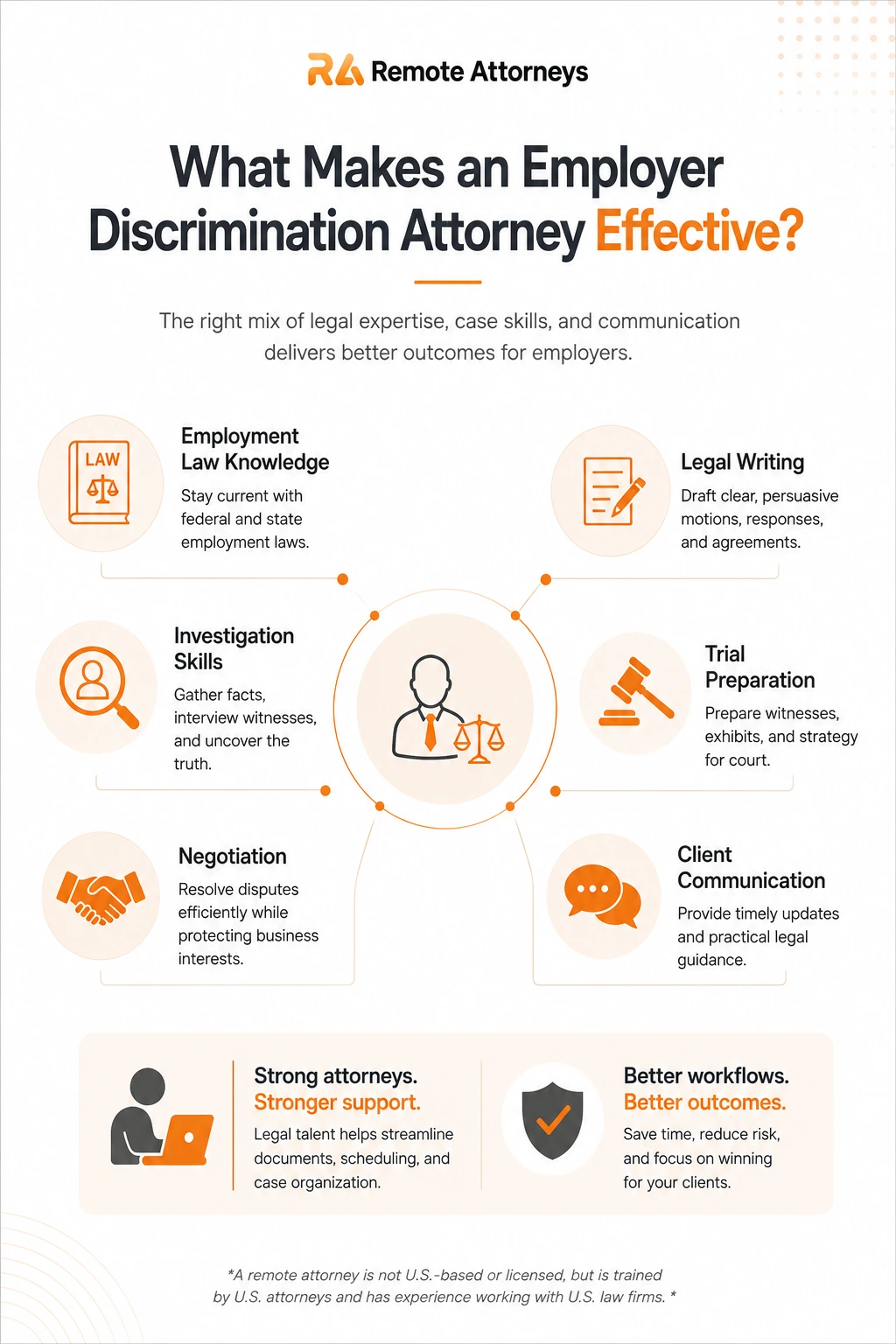
Skills That Make an Employer Discrimination Attorney Effective
Successful employer discrimination attorneys combine legal knowledge with strong organizational skills.
Core competencies include:
Employment Law Knowledge
Attorneys must understand evolving federal and state employment regulations while monitoring new court decisions.
Investigation Skills
Every discrimination case depends on collecting accurate evidence, interviewing witnesses, and identifying factual inconsistencies.
Legal Writing
Motions, discovery responses, position statements, and settlement agreements require precise legal drafting.
Negotiation
Many employment disputes resolve before trial. Strong negotiation skills help employers manage risk while protecting business interests.
Trial Preparation
When litigation becomes necessary, attorneys coordinate witness preparation, exhibits, discovery materials, and courtroom strategy.
Client Communication
Employers rely on timely updates and practical legal guidance throughout the case.
Many firms strengthen these workflows through hiring legal talent to assist attorneys with document preparation, scheduling, and case organization.
What Challenges Do Employment Law Firms Face When Managing Discrimination Cases?
Employer discrimination matters often become document-intensive very quickly.
Common operational challenges include:
Large Volumes of Evidence
Cases frequently involve personnel files, payroll records, emails, text messages, performance reviews, and workplace policies.
Multiple Filing Deadlines
Missing agency or court deadlines can significantly affect a client's defense strategy.
Discovery Demands
Employment litigation often includes extensive requests for production, interrogatories, and depositions.
Client Communication
Business clients expect consistent updates while continuing normal operations.
Growing Caseloads
As employment practices expand, attorneys spend increasing amounts of time managing administrative work instead of legal analysis.
These challenges make standardized internal procedures increasingly valuable for growing employment law practices.
How Can Law Firms Improve Employer Discrimination Case Management?
Efficient case management begins with consistent internal processes.
Law firms can improve productivity by focusing on several operational areas.
Standardize Client Intake
Using consistent intake procedures ensures attorneys collect the same critical information for every matter.
Create Document Workflows
Organized document naming conventions and filing procedures reduce unnecessary delays.
Maintain Litigation Calendars
Centralized calendaring helps firms monitor court deadlines, discovery schedules, and client meetings.
Improve Team Collaboration
Clear task assignments between attorneys and paralegals reduce duplicate work.
Use Case Management Technology
Legal practice management software improves visibility across active matters and simplifies document organization.
When Should Law Firms Add Legal Support?
Growing firms often recognize the need for additional support before hiring another full-time attorney.
Common indicators include:
- Attorneys spending more time on administrative work
- Increasing discovery requests
- Delayed drafting of pleadings
- Growing employment law caseloads
- Longer response times for clients
- Trial preparation affecting active matters
Additional legal professionals help firms maintain service quality while attorneys focus on strategy and client representation.
How Remote Attorneys Supports Employment Law Firms
Employment discrimination litigation demands careful preparation and consistent organization. Additional legal support helps firms manage increasing workloads without disrupting established processes.
Remote Attorneys provides experienced legal professionals who integrate into existing employment law teams and assist with:
- Legal research
- Discovery management
- Drafting pleadings
- Preparing EEOC documentation
- Organizing case files
- Trial preparation support
- Document review
These professionals work alongside your attorneys rather than replacing them, allowing firms to increase capacity while maintaining consistent client service.
Law firms expanding their employment practice may also explore resources on building an efficient remote legal team and improving law firm operations with virtual legal professionals to strengthen long-term growth.
Frequently Asked Questions
What does an employer discrimination attorney do?
An employer discrimination attorney advises businesses on workplace discrimination claims, prepares legal defenses, manages investigations, and represents employers during litigation.
What types of discrimination cases do employer discrimination attorneys handle?
They commonly handle claims involving race, age, disability, religion, sex, pregnancy, retaliation, wrongful termination, harassment, and workplace accommodations.
How does an employer discrimination case usually begin?
Most cases begin with an internal complaint or an EEOC charge before progressing through investigation, mediation, discovery, settlement, or litigation if necessary.
How can employment law firms manage discrimination cases more efficiently?
Standardized intake, organized document management, litigation calendars, and dedicated legal support help firms improve efficiency and reduce administrative delays.
When should a law firm hire additional legal support?
Firms should consider additional support when growing caseloads, discovery demands, and administrative work begin limiting attorney availability and client responsiveness.
Building a Stronger Employment Discrimination Practice
Employer discrimination attorneys help businesses navigate some of the most challenging workplace disputes. Success depends on strong legal analysis, organized case management, and consistent communication throughout every stage of litigation.
As employment law practices continue to grow, efficient workflows become just as important as legal expertise. Standardized processes, organized documentation, and dependable legal support allow attorneys to focus on developing effective strategies while maintaining high-quality client service.
Firms that invest in efficient operations are better positioned to manage larger caseloads, respond quickly to clients, and deliver stronger outcomes across every employment discrimination matter.


.webp)