

Missing a legal deadline can have serious consequences. A missed filing date, court appearance, statute of limitations, or discovery deadline may result in sanctions, malpractice claims, lost revenue, and damaged client relationships.
Legal calendaring is the process of tracking, calculating, and managing these critical dates. It helps law firms stay organized, maintain compliance with court rules, and reduce the risk of errors that could affect case outcomes.
Modern law firms rely on a combination of legal calendaring software, documented procedures, and trained legal support staff to manage increasingly complex caseloads. While technology can automate many tasks, successful calendaring still depends on accurate data entry, oversight, and accountability.
This guide explains how legal calendaring works, the risks of poor deadline management, best practices for reducing errors, and how legal support professionals help firms maintain reliable calendaring systems.
Key Takeaways
- Legal calendaring helps law firms track court dates, filing deadlines, and case milestones.
- Missed deadlines remain one of the leading causes of malpractice exposure.
- Effective calendaring combines technology, documented procedures, and human oversight.
- Dedicated legal support staff can help firms maintain accurate calendars and reduce administrative burden.
What Is Legal Calendaring?
Legal calendaring is the process of tracking court deadlines, filing dates, hearings, statutes of limitation, and other important legal events. It ensures attorneys and legal staff know what actions must be completed and when they must be completed.
Unlike a standard business calendar, legal calendaring accounts for court-specific rules, filing requirements, holidays, jurisdictional deadlines, and procedural timelines. These factors often determine whether a filing is considered timely.
For many law firms, legal calendaring serves as the foundation of risk management. Without a structured calendaring process, important deadlines can be overlooked, creating unnecessary exposure for the firm and its clients.
Why Legal Calendaring Matters
Legal calendaring helps law firms stay organized, manage workloads efficiently, and keep cases moving forward. By maintaining visibility over important dates and responsibilities, firms can improve coordination, accountability, and overall case management.
Legal calendaring helps firms:
- Track court appearances
- Monitor filing deadlines
- Manage statutes of limitation
- Schedule discovery obligations
- Coordinate client deliverables
- Maintain compliance with court rules
- Improve accountability across teams
A single missed deadline can impact an entire case. Reliable calendaring systems help prevent these issues before they occur.
Why Missed Deadlines Create Serious Risk for Law Firms
Deadline management directly affects legal outcomes. Missing a deadline can disrupt case progress, create procedural issues, and increase the time and effort required to move a matter forward.
Malpractice Exposure
Many malpractice claims stem from procedural errors rather than legal analysis.
Examples include:
- Missing a statute of limitations
- Failing to file a response on time
- Missing an appeal deadline
- Overlooking a court-imposed filing requirement
The American Bar Association's Legal Technology Survey Report highlights how firms continue adopting technology and operational systems to reduce administrative risk and improve practice management.
Court Consequences
Courts expect attorneys to comply with procedural rules and scheduling orders.
Missing a deadline may result in:
- Monetary sanctions
- Case delays
- Exclusion of evidence
- Denial of motions
- Dismissal of claims
Research from the National Center for State Courts shows that effective case scheduling and deadline management remain critical components of court administration and case progression.
Client Trust and Reputation
Clients expect their legal matters to be handled professionally and accurately.
When deadlines are missed, trust can quickly deteriorate. Even if the mistake does not immediately affect the outcome of a case, it may damage the firm's reputation and client relationships.
Operational Disruption
Missed deadlines often create emergency work that affects other matters.
Instead of focusing on strategic legal work, attorneys and staff may spend valuable time responding to preventable issues.
How Legal Calendaring Works in Modern Law Firms
Successful legal calendaring follows a structured workflow.
Step 1: Matter Intake and Deadline Capture
The process begins when a matter is opened.
Important dates identified during intake may include:
- Accident dates
- Contract deadlines
- Court appearances
- Filing requirements
- Statutes of limitation
Capturing these dates early reduces future errors.
For firms looking to improve intake workflows, a remote intake specialist can help ensure critical information is captured accurately and entered into case management systems from the start.
Step 2: Identify Trigger Events
Many deadlines are triggered by specific events.
Examples include:
- Filing a complaint
- Receiving a court order
- Serving discovery requests
- Scheduling a hearing
Each trigger event generates new deadlines that must be tracked.
Step 3: Calculate Applicable Deadlines
Legal deadlines often depend on court rules and jurisdiction-specific requirements.
Many firms use calendaring software to calculate dates automatically while still requiring staff review.
Step 4: Enter Deadlines Into the Calendar
Deadlines should be entered immediately after calculation.
Most firms maintain:
- Firm-wide calendars
- Attorney calendars
- Matter-specific calendars
- Team calendars
Step 5: Create Reminder Schedules
Reminder systems help prevent deadlines from being overlooked.
Typical reminder schedules include:
- 30 days before
- 14 days before
- 7 days before
- 3 days before
- Same-day reminder
Step 6: Secondary Review Process
Many firms require another staff member to verify important deadlines.
A second review reduces data-entry mistakes and helps maintain accountability.
Step 7: Verify Completion
Once a task is completed, the firm should confirm:
- The filing was submitted
- The court received it
- Confirmation was documented
- Calendar entries were updated
Common Legal Calendaring Mistakes
Many calendaring errors stem from inconsistent processes and oversight gaps rather than the tools being used. Identifying these common mistakes can help firms build more reliable systems and reduce avoidable administrative issues.
Relying on One Person
A single point of failure increases risk.
If one employee manages all deadlines, mistakes may go unnoticed until it is too late.
When calendaring responsibilities are concentrated with one individual, knowledge becomes difficult to share across the team. Firms benefit from having clear backup procedures and multiple team members who can access and review critical case dates when needed.
Manual Deadline Calculations
Court rules can be complex and frequently change.
Manual calculations increase the likelihood of errors.
Calculating deadlines by hand can become especially challenging when accounting for court holidays, jurisdiction-specific rules, and filing requirements. As caseloads grow, even small calculation mistakes can create scheduling conflicts and administrative inefficiencies.
Failure to Audit Calendars
Regular reviews help identify:
- Missing entries
- Incorrect calculations
- Duplicate deadlines
- Scheduling conflicts
Incomplete Matter Intake
Missing information during intake often creates future calendaring problems.
Firms that use standardized intake and legal document preparation support often reduce errors that can affect downstream calendaring and case management activities.
Accurate data collection is essential from the start of every matter.
Best Practices for Legal Calendaring and Deadline Management
Technology alone does not eliminate deadline risk.
Use Redundant Calendars
Critical deadlines should appear in multiple locations.
Examples include:
- Firm calendar
- Attorney calendar
- Practice group calendar
Establish Written Procedures
Documented workflows create consistency and make training easier.
Create Multiple Reminder Layers
Relying on a single reminder increases risk. Multiple reminders provide enough time to prepare filings, gather documents, and address issues before a deadline arrives.
Conduct Regular Audits
Many firms conduct:
- Weekly calendar reviews
- Monthly audits
- Matter-specific deadline reviews
Review Court Rule Updates
Court rules change periodically. Firms should monitor updates to ensure deadlines continue to be calculated correctly.
Legal Calendaring Checklist for Law Firms
Use this checklist to strengthen your calendaring process:
✅ Record trigger events immediately
✅ Calculate deadlines using current court rules
✅ Use multiple calendar systems
✅ Schedule multiple reminders
✅ Assign ownership for every deadline
✅ Conduct weekly reviews
✅ Audit active matters monthly
✅ Verify filings after submission
✅ Document completed tasks
✅ Maintain backup procedures
The Role of Virtual Legal Staff in Legal Calendaring
As firms grow, administrative responsibilities increase alongside caseloads.
Many attorneys find themselves spending valuable time managing deadlines, updating calendars, and tracking case events. Delegating these responsibilities can improve productivity while maintaining visibility into important dates.
Why Firms Delegate Calendaring Support
Attorneys generate the greatest value when focusing on legal strategy, advocacy, and client representation.
Administrative deadline management often consumes time that could be spent on billable work.
Delegating calendaring tasks allows attorneys to maintain oversight while reducing operational burdens.
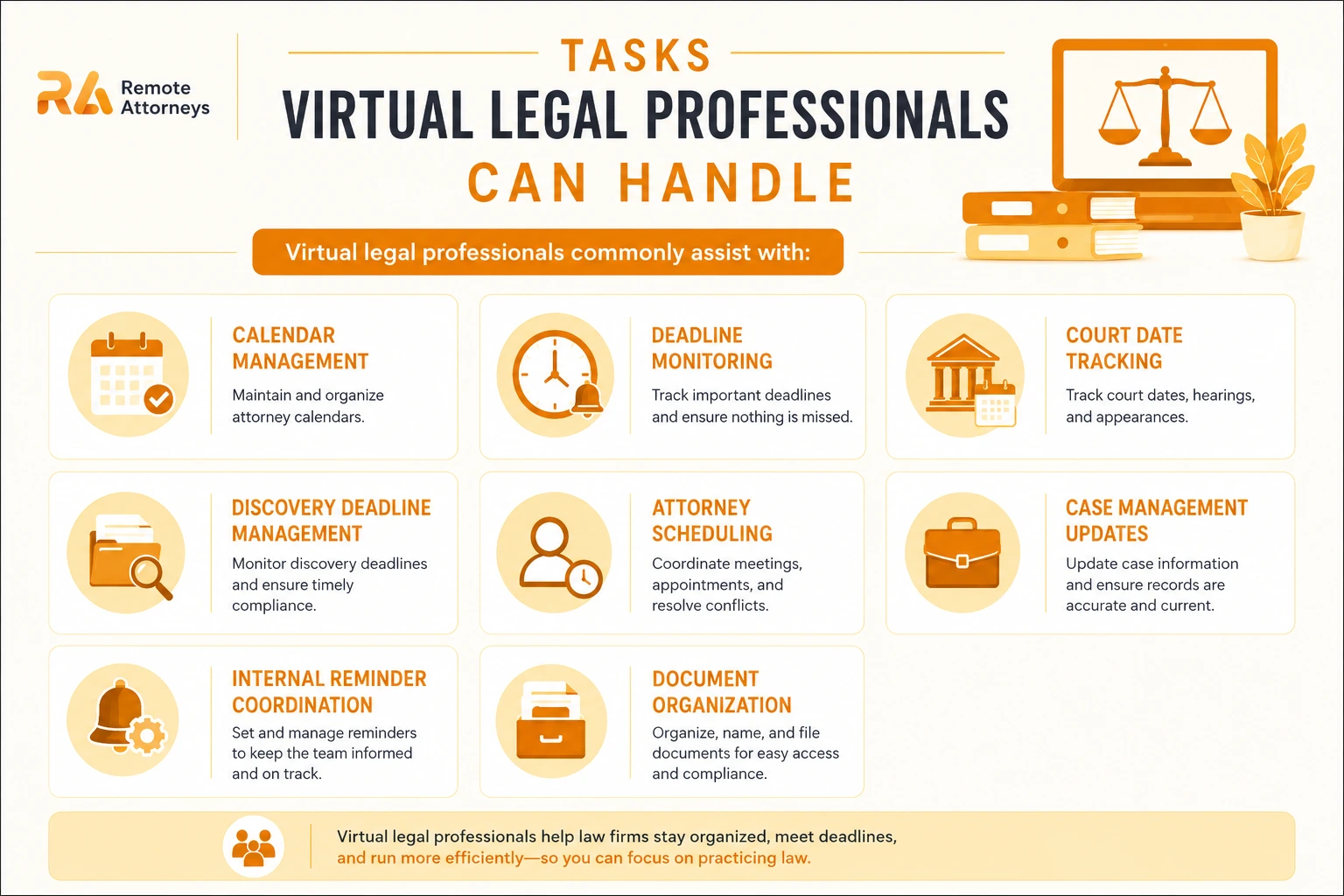
Tasks Virtual Legal Professionals Can Handle
Virtual legal professionals commonly assist with:
- Calendar management
- Deadline monitoring
- Court date tracking
- Discovery deadline management
- Attorney scheduling
- Case management updates
- Internal reminder coordination
- Document organization
Many firms rely on a virtual freelance paralegal to manage deadline tracking, maintain case calendars, and support attorneys throughout the litigation process.
For firms seeking broader operational improvements, resources on legal process outsourcing and law firm productivity strategies provide additional guidance.
Effective legal task delegation allows attorneys to spend more time on strategy while support professionals manage administrative workflows.
How Growing Law Firms Scale Legal Calendaring Without Increasing Risk
Growth often increases the complexity of deadline management.
More matters mean more filings, hearings, discovery obligations, and client communications.
Successful firms typically focus on:
Standardized Procedures
Consistent workflows reduce confusion and improve accountability.
Dedicated Support Resources
Administrative support helps maintain accuracy as caseloads increase.
Technology Integration
Connected systems reduce duplicate data entry and improve visibility.
Ongoing Quality Control
Routine reviews help identify issues before they become problems.
The Legal Services Corporation Justice Gap Report highlights the continuing demand for legal services, making efficient operational systems increasingly important for law firms managing growing workloads.
Frequently Asked Questions
What is legal calendaring?
Legal calendaring is the process of tracking court dates, filing deadlines, statutes of limitation, and case milestones to help law firms stay compliant and avoid missed deadlines.
Why is legal calendaring important?
Legal calendaring helps attorneys manage deadlines, reduce malpractice risk, improve case organization, and maintain compliance with court rules and procedural requirements.
Can legal calendaring software prevent missed deadlines?
Legal calendaring software automates calculations and reminders, reducing human error. However, firms should still use staff oversight and regular audits.
Who is responsible for legal calendaring in a law firm?
Responsibility varies by firm. Attorneys, paralegals, legal assistants, and administrative staff often share calendaring and deadline management duties.
How often should law firms review their calendars?
Most firms conduct weekly calendar reviews and monthly audits to verify deadlines, identify conflicts, and ensure important dates remain accurate.
Building a Reliable Legal Calendaring System
Legal calendaring is far more than scheduling. It is a core risk-management process that protects client interests, supports compliance, and helps law firms operate efficiently.
The firms that eliminate deadline risk successfully combine reliable technology, documented procedures, regular audits, and trained legal support professionals. These systems help reduce errors, improve accountability, and create a more organized workflow across the firm.
As legal practices continue to grow, investing in stronger legal calendaring processes remains one of the most effective ways to improve accuracy, maintain compliance, and support long-term operational success.